The State of Club Culture in 2026: Underground Resurgence vs Commercial Takeover
By maikk. Published . Filed under The Booth.
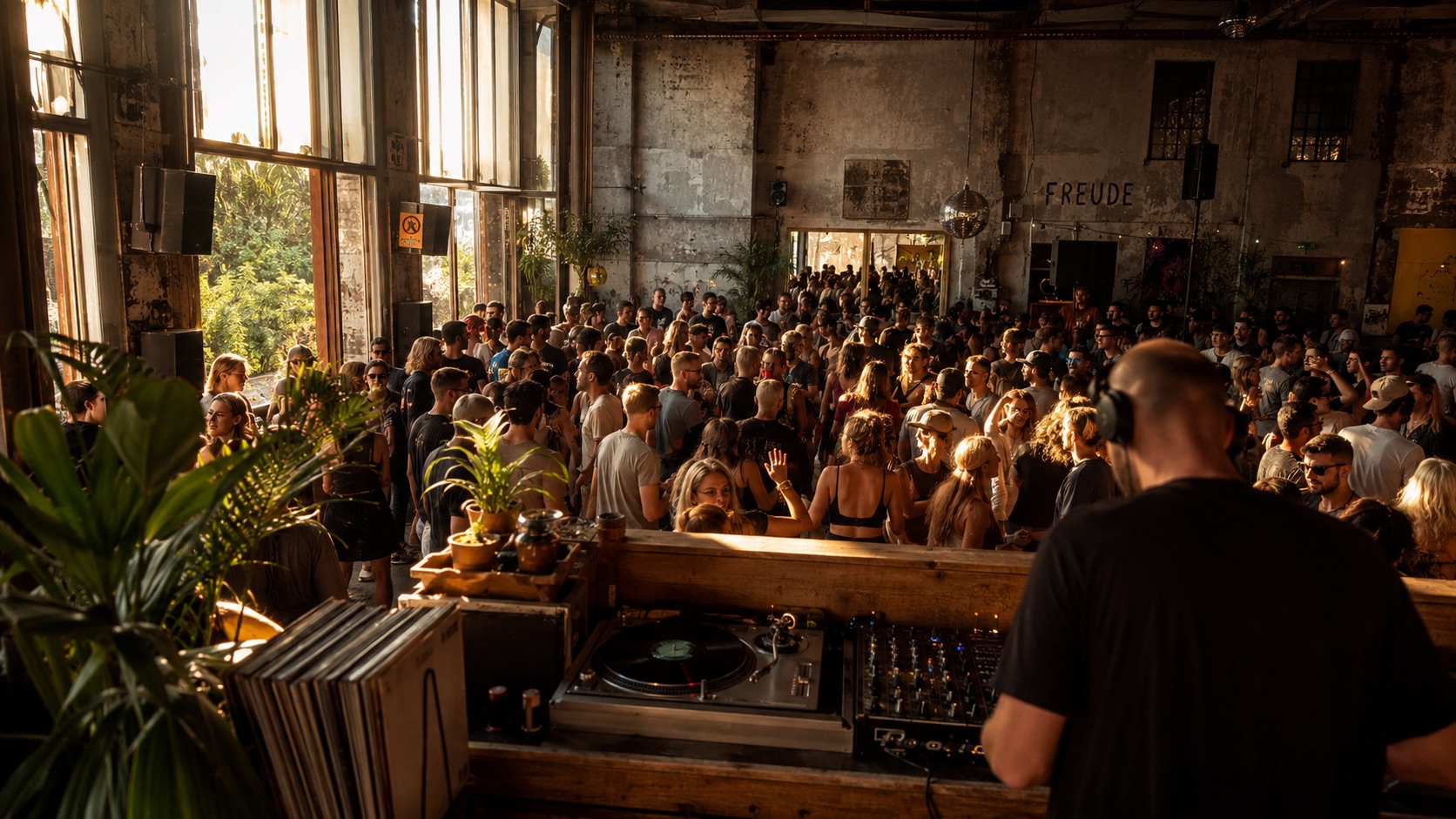
The dancefloor is a battlefield. Which side are you on?
The State of Club Culture in 2026: Underground Resurgence vs Commercial Takeover The dancefloor has always been political. In 2026, the battle lines are clearer than ever. --- Two Worlds, One Dancefloor Walk into any major city on a Saturday night and you'll find two entirely different versions of nightlife existing side by side. In one corner: the mega-clubs. LED walls, bottle service, €20 cocktails, phone-friendly lighting, and DJs who are booked more for their Instagram following than their mixing skills. The music is loud, predictable, and optimized for social media clips.
In the other corner: the underground. Converted warehouses, stripped-back sound systems, cash-only bars, phone-free policies, and DJs who play 6-hour sets of music you've never heard. The vibe is raw, the crowd is committed, and the music is the entire point. These two worlds have always coexisted, but in 2026, the gap between them is wider than ever — and the underground is mounting its most compelling resistance in years. --- 🏛️ The Icons Still Standing Berghain — Berlin, Germany Berghain remains the world's most famous techno club, and for good reason.
After more than two decades, it continues to set the standard for what a nightclub can be: a space where the music is sacred, the dancefloor is judgment-free, and the experience transcends mere entertainment. The club's famous door policy — and its equally famous "no phones" rule — ensures that what happens inside stays inside. This creates a sense of shared secrecy that bonds the crowd together and allows people to dance with a freedom that phone-lit venues can never replicate. Status in 2026: Still the benchmark. Still nearly impossible to get into. Still absolutely worth the attempt.
Fabric — London, England Fabric survived a closure scare in 2016 and has emerged stronger than ever. The Farringdon institution's commitment to bass music culture — spanning drum & bass, dubstep, techno, and everything in between — makes it one of the most diverse clubs in the world. Room One's Funktion-One system remains one of the best-sounding club installations anywhere, and the programming consistently balances legacy artists with emerging talent. Status in 2026: A survivor and an institution. Bassiani — Tbilisi, Georgia Bassiani isn't just a nightclub — it's a symbol of resistance.
Located in the basement of a Soviet-era swimming pool, the club has been at the center of Georgia's fight for freedom of expression. In a country where LGBTQ+ rights are under constant threat, Bassiani's dancefloor represents a space of radical acceptance. The music is uncompromising techno, the crowd is passionate, and the political dimension adds a weight to the experience that few other clubs can match. Status in 2026: More important than ever.
De School — Amsterdam, Netherlands De School operated in a former technical school and was known for its marathon parties, art gallery, restaurant, and impeccable programming. Though the original space has closed, its influence on Amsterdam's club culture continues through affiliated events and the community it built.
Status in 2026: The spirit lives on through its community. --- 🌊 The New Wave While the iconic clubs continue to do what they do, the most exciting developments in 2026 are happening at the margins: The Warehouse Revival Across Europe and beyond, a new generation of promoters is taking over industrial spaces, abandoned buildings, and unusual venues for one-off or semi-regular events. These parties operate in the grey area between legal and illegal, giving them an edge and excitement that licensed venues can't replicate.
The formula is simple: find a space with character, install a good sound system, book DJs who care about music, and let the rest take care of itself. No VIP areas, no sponsorship logos, no social media strategy — just music and people. Local Collectives The most important trend in nightlife in 2026 isn't a new club or a new genre — it's the rise of local collectives. Small groups of music lovers who organize regular events in their communities, building loyal followings through consistent quality and genuine personal connections. These collectives are the lifeblood of the underground.
They book local talent alongside occasional visiting artists, they reinvest profits into the community, and they create spaces where people feel genuinely welcome. --- 📱 The Phone Question Perhaps no issue divides the nightlife world more clearly than phone policies. The case for phone-free: Berghain's no-phone policy has proven that clubs can thrive — and indeed flourish — without social media documentation. When phones are absent, people are more present, more uninhibited, and more connected to the music and each other.
The dancefloor becomes a genuinely shared experience rather than a backdrop for content creation. The case against banning phones: Some argue that phone bans are elitist, that they prevent people from sharing their experiences, and that they're impractical for safety reasons. Others point out that social media documentation — while often annoying — serves as free marketing for clubs and DJs. TheBunker's position: We lean heavily toward phone-free, or at least phone-restricted, environments.
The best nights we've experienced have been the ones where no one was filming, where the music was the only thing that mattered, and where the memories lived in our minds rather than our camera rolls. --- 💰 The Economics of Underground Nightlife Running an underground club or event series in 2026 is brutally difficult: Rent and venue costs have skyrocketed in most major cities Sound system installation and maintenance is expensive Insurance, licensing, and security costs continue to rise Artist fees — even for underground DJs — have inflated significantly Gentrification threatens the industrial and marginal spaces where underground culture thrives Many underground venues operate on razor-thin margins, relying on bar sales and modest door charges to survive.
The economics only work when the crowd is loyal and the operation is lean. This is why community matters so much. A club with a dedicated local following can survive on modest ticket prices and honest bar margins. A club that relies on tourists and one-time visitors needs to charge more and often compromises on the experience to do so. --- 🌍 The Global Picture Berlin: Still the Capital, But Changing Berlin remains the spiritual home of techno, but the city is changing. Rising rents, stricter regulations, and an influx of "techno tourism" are putting pressure on the underground scene.
Many smaller clubs and studios have been priced out of central neighborhoods, pushing the scene further into the periphery. London: Resilient Despite Everything London's nightlife has faced challenge after challenge — COVID closures, rising costs, the loss of venues to development — and it keeps coming back. The city's strength lies in its diversity: from Fabric's bass music to Corsica Studios' experimental programming to the countless DIY events in South and East London.
Amsterdam: Quality Over Quantity Amsterdam's club scene has matured significantly, with venues like Shelter, De Marktkantine, and the various DGTL-affiliated spaces offering consistent quality. The city's strength is its infrastructure — great public transport, tolerant policies, and a music-literate population. Tbilisi: The Underground's Underground Georgia's capital continues to punch far above its weight. Bassiani, Khidi, and a growing network of smaller venues host some of the most intense techno events in the world, fueled by a passionate local scene.
Tokyo: A World Apart Japan's club culture operates by its own rules — impeccable sound systems, respectful crowds, closing times that would make European ravers weep, and a depth of musical knowledge that's humbling. Venues like Contact, Vent, and the legendary Womb continue to set global standards. --- 🔮 The Resident DJ: Endangered Species? One of the most concerning trends in modern club culture is the decline of the resident DJ.
Where clubs once built their identities around resident DJs who played every week — developing deep relationships with the venue, the sound system, and the crowd — many now rely on a rotating cast of guest DJs promoted primarily through social media. This matters because resident DJs are the foundation of club culture. They know the sound system intimately. They know the crowd — who comes every week, what they like, when the energy shifts. They can take risks because they'll be back next week. They build the relationships that turn a venue from a room with speakers into a community.
The best clubs in 2026 still prioritize residents. They understand that the DJ-venue-crowd relationship is what creates the magic that keeps people coming back. --- 🏗️ The Gentrification Problem It's the oldest story in underground culture: artists and musicians move to an area because it's cheap. They create a scene. The scene attracts attention. Property developers notice. Rents rise. The artists and musicians who created the scene can no longer afford to live there. The scene dies — or moves elsewhere. In 2026, this cycle is playing out in cities around the world.
Neighborhoods that were incubators of club culture are being transformed into luxury developments, pushing nightlife further into the margins. The response from the underground has been threefold: 1. Moving to the periphery — finding new spaces in industrial zones and suburbs 2. Temporary and nomadic events — avoiding fixed venues that can be priced out 3.
Political organizing — advocating for nightlife protection policies and cultural zoning --- TheBunker's Vision At TheBunker, we believe club culture is worth fighting for — not as a business model or a lifestyle brand, but as a fundamental human need. The dancefloor is one of the last truly democratic spaces: a place where social hierarchies dissolve, where the music speaks louder than words, and where strangers become a community. Our commitment: Music first, always. The programming serves the dancefloor, not the algorithm. Community over profit.
We'd rather have 200 regulars than 1,000 tourists. Resident culture. Our DJs know our sound, our crowd, and our values. Accessible pricing. Club culture shouldn't be a luxury good. Phone-restricted environments. Be here now. The commercial takeover is real, but it's not inevitable. As long as there are people who care more about the music than the marketing, the underground will survive. Because the underground is not a place. It's a commitment. — TheBunker Crew
Tags: ClubCulture, Underground, Nightlife, Berghain, Fabric, Techno, House, Community