Medusa Festival 2026: 185,000 People, Nine Stages, and Not Enough Records
By maikk. Published . Filed under The Booth.
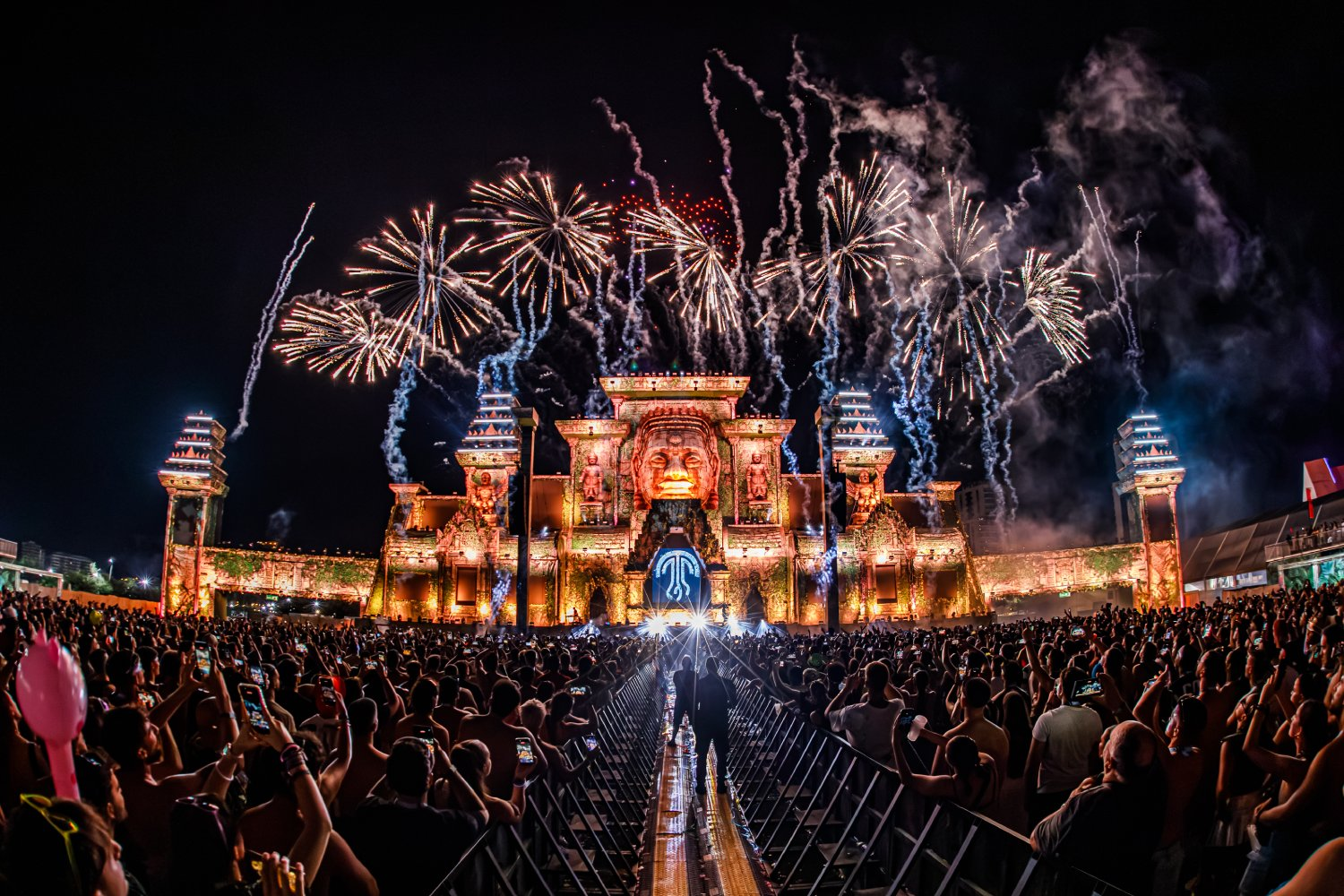
Four days in Cullera as a paying punter. The production is the best in Spain and the numbers are historic, but hardstyle and hard techno swallowed the weekend, Netherworld's Atlantis followed me across every stage, and Carl Cox's flight never landed. An honest, unsponsored opinion on what Medusa has actually become.
Medusa Festival 2026: 185,000 People, Nine Stages, and Not Enough Records Cullera, Valencia | August 13-17, 2026 | Attended as a punter, not on a guestlist --- I went to Medusa this year. Paid for my ticket, slept in the camping, did the four days properly. And I came home with a feeling I've been chewing on for weeks, because it's not the one the press releases are selling. Medusa 2026 was, by every number that matters to an organiser, a triumph. 185,000 attendees across the weekend — about 5,000 over their own forecast.
56,000 people inside the site at once on Saturday, the biggest single-moment crowd in the festival's history. Nine stages. 150 DJs. A mainstage 105 metres wide and 27 tall, 250 drones at 120 metres, pyrodrones, horizontal pyrotechnics run along cables. Spain has never built anything like it on a beach. And musically, I was bored more often than I expected to be. That's an uncomfortable thing to write about a festival that plainly worked for most people there. So let me be precise about it, because "it was mid" is not a review. --- The problem isn't the genres. It's the ratio.
If you read the official genre list, Medusa looks like the broadest festival in the country: techno, house, tech house, EDM, hard techno, hardstyle, hardcore, trance, bass. All true. All present. I'm not going to pretend the programming sheet lies. But a lineup isn't a list, it's a distribution. And on the ground, across four days and nine stages, the centre of gravity sat very heavily in one place: hardstyle and hard techno. Raw, reverse bass, 150+ BPM, screeching leads.
It was everywhere — Rebelion, Phuture Noize, D-Sturb, Wildstylez, Partyraiser, and the takeovers built entirely around that sound: La Resistencia, 240km/h, Universo Makina, Masters of Hardcore. Every one of them packed out from the first minute. Here's the thing — those takeovers were genuinely good. 4444 Of A Kind, the Sub Zero Project and D-Block & S-te-Fan project, was the best-produced set I saw all weekend and I'd defend that to anyone. Sara Landry closing at dawn was properly menacing. The hard scene in Spain is in rude health and Medusa is one of the reasons why.
But when the hard sound is the default rather than one option among several, something happens to your weekend: you stop choosing and start absorbing. By Saturday I was walking between stages and finding variations on the same fundamental energy — same tempo band, same structure, same payoff. The differences were real to someone deep in the subgenre. To me, four days in, they'd flattened out. I've seen the counter-argument, and I want to give it its due, because a couple of Spanish outlets covering the festival pushed back directly on the monotony complaint.
Their case: you could move between Miss Monique, HALŌ and Nico Moreno in a single evening, which is a genuinely wide spread of sounds, so the variety objection doesn't hold. That's fair on paper and I don't think they're being dishonest. But it proves less than it looks like it does. The existence of variety across a timetable is not the same as experiencing variety across a night. With brutal overlaps — and there were brutal overlaps, everyone was complaining about them — you're not assembling a curated journey.
You're picking a lane and mostly staying in it, because crossing a site holding 56,000 people costs you twenty-five minutes and your spot. And most lanes led to the same place. --- Atlantis. Again. And again. Here's the detail that turned a vague feeling into a conviction. Netherworld's "Atlantis" followed me around the entire festival. Original, edits, bootlegs, remixes, a kick swapped underneath it, a hard techno reading of it, that melody surfacing mid-set as a wink — it turned up in set after set, across stages, across days, across artists who otherwise had nothing in common.
I stopped being surprised by it and started waiting for it. By Sunday it had become a running joke with the people I was with: who's dropping Atlantis next. I'm not going to pretend this is a documented statistic. I looked, and nobody's published a tracklist count. This is mine — one punter, four days, a lot of stages. And look — every festival season has its anthem. That's normal, that's how dance music has always worked, and a track earning that status is a compliment to it. "Atlantis" is a big record with a huge amount of remixes in circulation, which is exactly why it spreads so easily.
But when one record is the connective tissue between sets that are supposed to be different artists making different arguments, it stops being an anthem and starts being evidence. Evidence that a lot of those sets were drawing from a narrower shared pool than the billing suggested. You don't notice a festival's crate is shallow from one set. You notice it when the same record is the high point of six. --- Where was the EDM? This surprised me, and I don't think it's been said clearly enough. Medusa has historically been Spain's big-tent beach EDM festival. That's the brand.
And this year, actual EDM — big-room, festival-house, hands-in-the-air main stage material — felt like a minority sound at its own festival. The hard stages had gravity. The techno had credibility. EDM had... the name on the poster. Dimitri Vegas is the clearest case. He played Friday, and he has moved substantially off the EDM line that made him a main stage fixture.
That's not me guessing — he spent 2026 leaning hard into the harder end, playing solo while Like Mike stepped back from touring for his health, dropping hard dance edits and material like "Parada De Techno" with Marlon Hoffstadt. At Tomorrowland this summer he ran a full-throttle solo mainstage set built on hard dance rather than classic DVLM EDM. I don't think that's a sellout and I'm not mocking it — artists are allowed to follow what's exciting them, and the hard sound is plainly where the energy is right now.
But the effect at Medusa was that even the guy booked as an EDM headliner was pulling toward the same centre of gravity as everything else. When your EDM headliner is playing hard dance, you no longer have an EDM stage. You have another hard stage with a bigger budget. Tiësto came back to Cullera after two decades, which should have been the emotional peak of the weekend.
It wasn't one to frame — I'm not alone in thinking so, that was the read in the Spanish press too. --- The two sets that actually moved Two artists broke the pattern, and both did it the same way: by playing records from more than one world. Oliver Heldens (Sunday) was the best argument of the weekend for range. He functioned as the transition point of the whole night — bringing the tempo somewhere human, moving through house and future house and the melodic end without ever feeling like he was killing the energy to do it.
After days of being pinned at 150, a set with actual dynamics landed like a window opening. The crowd stayed. That's the part people who dismiss this stuff miss: variety didn't cost him the floor. DJ Nano was the other one, and he's the one I'd put first. Spanish, on a prime evening slot, and completely unbothered by the idea that he had to pick a lane. He moved across styles and eras and trusted the crowd to follow, and they did — because he built it properly, with pacing, with contrast, with a sense that the set was going somewhere rather than sustaining one state for ninety minutes.
Both sets shared a quality the rest of the weekend mostly lacked: a shape. A beginning, a middle, somewhere to arrive. When a whole festival is tuned to peak intensity, nothing peaks, because there's no floor to rise from. --- Carl Cox never made it The biggest absence of the festival was nobody's fault. Carl Cox was booked for Saturday and never made it to Cullera — flight problems, cancelled at the last minute. He told fans himself rather than letting the festival absorb it, which is the right way to handle it.
The organisers have said they hope to bring him back to Cullera in 2027, and I hope that happens. That was, by common agreement, the weekend's big negative. But I want to say something about why it hurt as much as it did, because it goes to my whole argument. Saturday was already the difficult day. A serious storm forced gates from 17:00 back to 20:00, wind and rain damaged tents in a campsite holding 7,000+ people, and mobile coverage collapsed under 56,000 people trying to find each other. Losing Cox on top of that wasn't just losing a headliner.
Cox is one of a shrinking number of DJs who could have solved the problem I'm describing. He's spent thirty years being able to move through house and techno and everything around them in one set without losing a room. He was the booking most likely to break the sameness. When the flight went, the weekend didn't just lose a name — it lost its best shot at a genuinely different Saturday night. Nobody could have known that in advance, and no one is to blame for weather or aviation. But it's why that gap was felt more than a normal cancellation. --- So what is Medusa now?
I want to be straight, because it would be easy to read this as a hit piece and it isn't one. Medusa 2026 was a spectacular event. The production is world class and genuinely ahead of anything else in Spain — the drone work, the mainstage scale, the pyro are not marketing puff, they're real and they're impressive. Drinks were about €7, or five for €40, which for a festival this size is honestly reasonable. 185,000 people had a very good time and they weren't wrong to. But Medusa has quietly become a hard dance festival that still markets itself as an all-genres one.
That's the honest description. And there's nothing wrong with being a hard dance festival — La Resistencia and Masters of Hardcore filling their rooms instantly is proof there's a huge, real, committed audience for exactly that. The issue is the mismatch. If you go expecting the spectrum the poster promises, you'll spend four days noticing that most roads lead to the same intensity, and that the same Netherworld record is waiting for you at the end of several of them. If you go for the hard sound, you'll have one of the best weekends of your life. I'd rather they owned it.
Say what it is, book the hard stages even harder, and then make the non-hard stages genuinely count instead of decorative — two or three more bookings with the range of a DJ Nano or an Oliver Heldens would fix a lot. The audience that stayed for Heldens' whole set proves the appetite is there. Verdict: an unbeatable production wrapped around a narrower record collection than it admits. I'll go back. I'll just go back knowing what I'm actually buying a ticket for. --- Went to Medusa this year too? Tell me I'm wrong in the comments — especially if you counted how many times Atlantis dropped.
I gave up. maikk
Tags: Medusa2026, Cullera, Hardstyle, HardTechno, FestivalReview, OliverHeldens, DJNano, CarlCox, DimitriVegas, Netherworld, Opinion, SpainElectronic