Advanced Mixing Techniques Every DJ Should Master in 2026
By maikk. Published . Filed under Pro Tips.
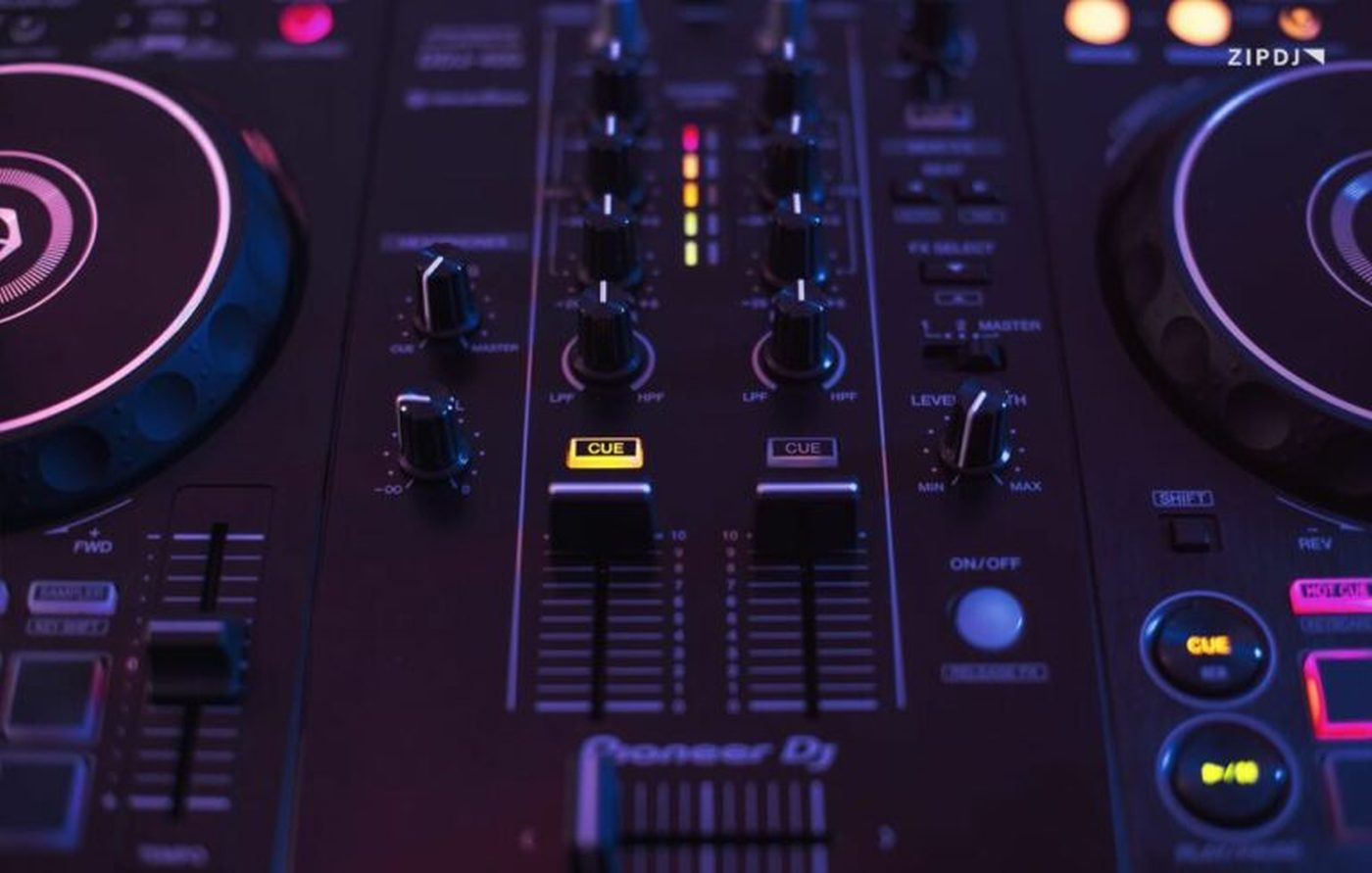
Beyond beatmatching: the art of building a journey on the dancefloor.
Advanced Mixing Techniques Every DJ Should Master in 2026 Beatmatching is the beginning, not the destination. Here's what comes next. --- The Truth About Mixing Here's something that most DJ tutorials won't tell you: perfect beatmatching is the least important skill an advanced DJ possesses. Don't misunderstand — you need to be able to beatmatch. It's the foundation. But in 2026, with sync buttons, quantized loops, and software that can align beats automatically, the technical act of matching two tempos is no longer what separates a good DJ from a great one.
What separates them is musical storytelling — the ability to take a room full of strangers on a journey that has tension, release, surprise, and emotional resonance. That's what this guide is about. --- 🎚️ EQ Mixing: The Foundation of Clean Transitions The Principle EQ mixing is the practice of using your mixer's equalizer to create space for an incoming track by removing frequencies from the outgoing track.
It's the single most important mixing technique after beatmatching, and it's what makes the difference between a transition that sounds like two tracks playing simultaneously and one that sounds like a single, evolving piece of music. The 3-Band Approach Most DJ mixers have 3-band EQs: Low (bass), Mid, and High. The Bass Swap: The most fundamental EQ mixing technique. Two basslines playing simultaneously almost always sounds terrible — they clash, create phase issues, and turn the low end into mud. The solution: before bringing in the new track's bass, remove the old track's bass.
The execution: 1. Start the incoming track with its bass EQ at zero (fully cut) 2. Bring the track in using the channel fader or crossfader 3. At the right moment — usually the start of a new phrase — simultaneously boost the incoming bass to full and cut the outgoing bass to zero 4. The crowd hears a seamless transition where one bassline replaces another The Mid-Range Blend: Mids carry the melodic and harmonic content. You can blend mids more gradually than bass, but be careful — conflicting melodies in the mid-range will sound dissonant and confusing.
The High Swap/Blend: Hi-hats, cymbals, and high-frequency textures can generally coexist for longer periods without clashing. Use the highs to create a sense of movement and evolution during long blends. The 4-Band Approach Some mixers (like the DJM-V10 and the new DJM-V5) offer 4-band EQs that split the mid-range into Low-Mid and High-Mid.
This gives you more precise control: Low: Bass and sub-bass Low-Mid: Lower harmonics, warmth High-Mid: Upper harmonics, vocal presence High: Cymbals, air, brightness The 4-band approach is especially useful for genres with complex mid-range content — tech house, progressive, and anything with prominent vocals or synth leads. --- 🎵 Harmonic Mixing What It Is Harmonic mixing is the practice of mixing tracks that are in compatible musical keys. When two tracks share the same key (or a harmonically compatible key), their melodic elements blend naturally.
When they clash, the result is discordant and uncomfortable.
The Camelot Wheel The Camelot Wheel maps all 24 musical keys to a simple numbered system: Each key is represented by a number (1-12) and a letter (A for minor, B for major) Compatible keys are adjacent on the wheel: same number, +/- 1, or switch between A and B Example: If your current track is 8A (A minor), compatible keys include: 8A (same key — perfect match) 7A (one step down — subtle energy drop) 9A (one step up — subtle energy lift) 8B (relative major — mood shift from dark to bright) Tools Mixed In Key ($58) — The original harmonic analysis software Rekordbox — Built-in key detection Traktor — Built-in key detection Key notation in Beatport — Most tracks now show their key on purchase The Reality Check Harmonic mixing is a powerful tool, but don't let it become a prison.
Some of the most impactful transitions deliberately break harmonic rules — a dissonant clash can create tension that resolves beautifully when the new track takes over fully. Use harmonic mixing as a guideline, not a rule. --- 🔥 Creative Transitions The Long Blend (16-32 Bars) When to use it: Minimal techno, deep house, ambient — genres where tracks have long, textured intros and outros designed for blending. How: Introduce the incoming track's hi-hats and atmospheric elements during a breakdown or minimal section of the outgoing track.
Gradually shift the EQ balance over 16-32 bars until the new track dominates. Done well, the audience shouldn't be able to pinpoint the exact moment the transition happened. The Quick Cut (1-4 Bars) When to use it: High-energy techno, drum & bass, anything with strong drop moments. How: Build tension with both tracks playing, then cut to the incoming track at a strong downbeat — usually the start of a new phrase. The sudden change creates excitement and energy. The Echo/Delay Out When to use it: When you want to create a dramatic transition with a sense of space.
How: At the end of a phrase, apply a delay or echo effect to the outgoing track while cutting its volume. The delays ring out as the new track comes in, creating a sense of one track melting into another. The Filter Sweep When to use it: Versatile — works in almost any genre. How: Apply a low-pass filter to the outgoing track, gradually reducing the cutoff frequency until only the sub-bass remains. Simultaneously, bring in the new track. When the filter fully closes, cut the outgoing track. The Acapella Drop When to use it: House music, disco, garage — genres where vocals are prominent.
How: Using stem separation or an acapella version, isolate the vocal from one track and play it over the instrumental of another. This creates a unique, one-time-only moment that the crowd won't hear anywhere else. The Loop Build When to use it: Building tension before a big moment. How: Set a short loop (2 or 4 beats) on the outgoing track. Gradually apply effects — filter sweeps, reverb, pitch shifts — while bringing in the new track underneath. Release the loop at the drop point. --- 🌊 Energy Management The Journey Metaphor A great DJ set is a journey with a narrative arc: 1.
Opening (0-30 min): Set the tone. Establish the mood and tempo. Don't peak too early. 2. Building (30-60 min): Gradually increase energy. Introduce more driving elements. 3. Peak (60-90 min): Maximum energy. The biggest tracks, the tightest mixing, the highest intensity. 4. Sustain (90-120 min): Maintain the peak without exhausting the crowd. Vary the energy within a high range. 5. Resolution (last 15-30 min): Bring the energy down gradually. Leave the crowd satisfied but wanting more. Reading the Room No amount of pre-planning survives contact with a real dancefloor.
You need to constantly assess: Crowd density: Is the floor full or sparse? Adjust your energy accordingly. Response patterns: Are people dancing, standing, or leaving? Trust what you see over what you planned. Energy requests: Is the crowd asking for more intensity or a breather? Learn to read the collective body language. Time context: A 2 AM crowd wants different things than a 6 AM crowd. The Valley Technique One of the most counterintuitive but effective techniques is the deliberate energy drop.
After a sustained peak, play something unexpected — a deep, rolling track where you'd expect another banger. The crowd's energy will dip, creating tension and anticipation. When you bring the energy back up, the peak hits harder because of the contrast. --- ⚠️ Common Mixing Mistakes 1. Over-mixing. Not every transition needs to be a 32-bar masterpiece. Sometimes the best transition is a clean cut. 2. Effect abuse. Delay and reverb are spices, not the main course. Use them sparingly. 3. Ignoring phrase structure. Most electronic music is built in 8, 16, and 32-bar phrases.
Start and end your mixes on phrase boundaries. 4. Clashing bass. Two basslines at once almost never works. Swap them cleanly. 5. Not knowing your tracks. You should know every track in your bag — where the breakdowns are, where the builds happen, what key it's in, where the energy peaks. 6. Playing for yourself, not the crowd. Your personal favorites might not be what the dancefloor needs at that moment. Adapt. 7. Fear of silence. A moment of near-silence between tracks can be incredibly powerful.
Don't be afraid to let a track end before starting the next one. --- 📝 Practice Routine Weekly Practice (2-3 Hours) 1. Warm-up (30 min): Mix freely through your collection. Focus on finding combinations that work. 2. Technical drill (30 min): Practice one specific technique — EQ swaps, harmonic mixing, long blends, quick cuts. 3. Themed set (60 min): Record a set with a specific concept — an opening set, a peak-time set, a closing set. Play it back and critique yourself. 4. Discovery (30 min): Listen to new music. Organize, tag, and annotate tracks for future use.
Monthly Review Record every practice set. Listen back the next day with fresh ears. Note: Where did the energy dip unexpectedly? Which transitions were smooth and which were rough? Were there moments where a different track choice would have been better? Did the set tell a story or just play tracks? --- Final Thoughts Mixing is the language of DJing, and like any language, it takes years to speak fluently. The techniques in this guide are tools — they don't work in isolation.
The magic happens when you combine technical skill with musical knowledge, emotional intelligence, and the courage to take risks. The dancefloor is your canvas. The mixer is your brush. The music is your paint. Now go practice. — TheBunker Crew
Tags: DJTips, Mixing, Beatmatching, EQMixing, HarmonicMixing, Transitions, DJSkills, ProTips